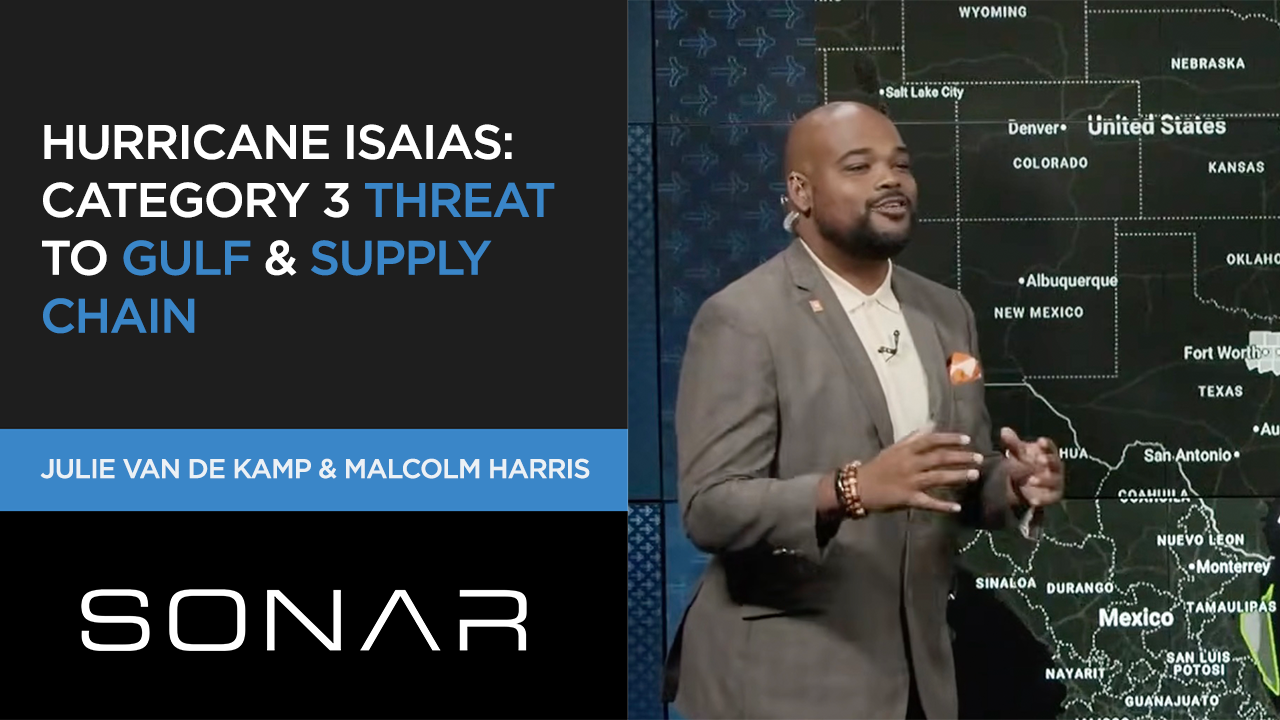
Hurricane Isaias is intensifying in the Gulf, threatening to become a Category 3 storm and unleash significant damage across the Southeast. We break down
What happened
window.googletag = window.googletag || {cmd: []}; googletag.cmd.push(function() { var gptSlotD = googletag.defineSlot('/21776187881/FW_Super_Leaderboard', [[970, 90], [728, 90]], 'div-gpt-ad-1770130730069-0').addService(googletag.pubads()); var gptSlotM = googletag.defineSlot('/21776187881/FW_Super_Leaderboard', [[320, 50], [300, 50], [300, 100]], 'div-gpt-ad-1770130730069-0m').addService(googletag.pubads()); googletag.pubads().enableSingleRequest(); googletag.enableServices(); setInterval(function() { if (document.hidden) return; var visible = [gptSlotD, gptSlotM].filter(function(s) { var el = document.getElementById(s.getSlotElementId()); return el && el.offsetParent !== null; }); if (visible.length) { googletag.pubads().refresh(visible); } }, 30000); });
Why it matters
Hurricane Isaias, currently a Category 1 storm, is forecast to strengthen to a Category 2 by Wednesday and potentially reach Category 3 with winds of up to 100 miles per hour before making landfall Friday around 2 p.m., according to a FreightWaves Sonar analysis. The storm’s projected path stretches from just east of Houston across to the Florida Panhandle, encompassing major freight corridors and energy infrastructure in the Gulf Coast region.
The most consequential supply chain risk lies in the energy sector. Up to six refineries sit in the storm’s path, and Gulf State refineries collectively account for 50% of the nation’s refining capacity — a total of 18.2 million barrels per day. Offshore production operators are already sending home nonessential workers, though output continues normally for now. Any significant damage could take days to weeks to repair, a concern amplified by already-elevated diesel prices.
Freight markets in the Southeast are beginning to respond. Tender rejections in New Orleans, Mobile, and Montgomery are already running in the 17% to 19% range, edging above national averages. Truckload volumes are also ticking upward in New Orleans and Mobile as some shippers move freight ahead of the storm’s arrival. Van de Kamp said she expects to see a “Southeast pop” in spot rates and tender rejections depending on the extent of flooding and how quickly carriers can access affected areas once the storm passes.
This news brief is based on reporting published by FreightWaves on 2026-10-07. The original report is linked below.
FreightWaves
https://www.freightwaves.com/news/hurricane-isaias-category-3-threat-to-gulf-supply-chainThis independent news brief is based on the public source identified above. It is an original summary or translation, not a reproduction of the source article. Rights in source text, research, trademarks and images remain with their respective owners; images are used under the licence or permission identified in the credit. Rights holders may contact rights@goodproductasia.com with evidence of ownership. Verified concerns will be corrected, replaced or removed promptly. This report is not investment, legal, medical or purchasing advice.