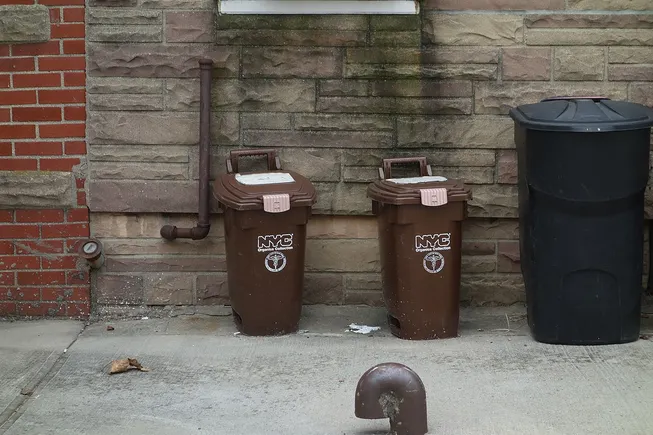
The city council passed a bill allowing DSNY to expand commercial organics diversion. It also continues to support community composters and debate additional measures to expand compost capacity.
What happened
Let Waste Dive's free newsletter keep you informed, straight from your inbox.
Why it matters
New York is one of several states that have enacted a commercial organics diversion requirement for large generators. In 2024, Gov. Kathy Hochul signed a bill into law that gradually increases the number of businesses subject to the requirements: those that generate one ton per week were subject to the law as of January of this year, while the threshold ratchets down to those that generate half a ton per week in January 2028. Businesses subject to the law are required to donate edible food, and must also recycle scraps if they are within 25 miles of an organics recycler.
New York City has also looked for ways to incentivize increased organic waste diversion. While all residences were required to separate their organics as of April 1, 2025, the capture rate for the curbside collection program has been low. The city also looked to incentivize more businesses to separate organics by requiring haulers in the commercial waste zone program to provide a discount for the separated organics stream, with limited uptake.
Int. 31 allows DSNY to require a wide swath of commercial businesses that handle food to divert scraps from disposal, including wholesalers, venues and retail and food service establishments. The commissioner is instructed to evaluate existing organic waste processing capacity and pricing to determine if capacity exists at a price "competitive with the cost of disposing of organic waste by landfill or incineration."
This news brief is based on reporting published by Waste Dive on 2026-07-08. The original report is linked below.
Waste Dive
https://www.wastedive.com/news/nyc-commercial-organics-diversion-bill-passage-compost-capacity/824686/This independent news brief is based on the public source identified above. It is an original summary or translation, not a reproduction of the source article. Rights in source text, research, trademarks and images remain with their respective owners; images are used under the licence or permission identified in the credit. Rights holders may contact rights@goodproductasia.com with evidence of ownership. Verified concerns will be corrected, replaced or removed promptly. This report is not investment, legal, medical or purchasing advice.